

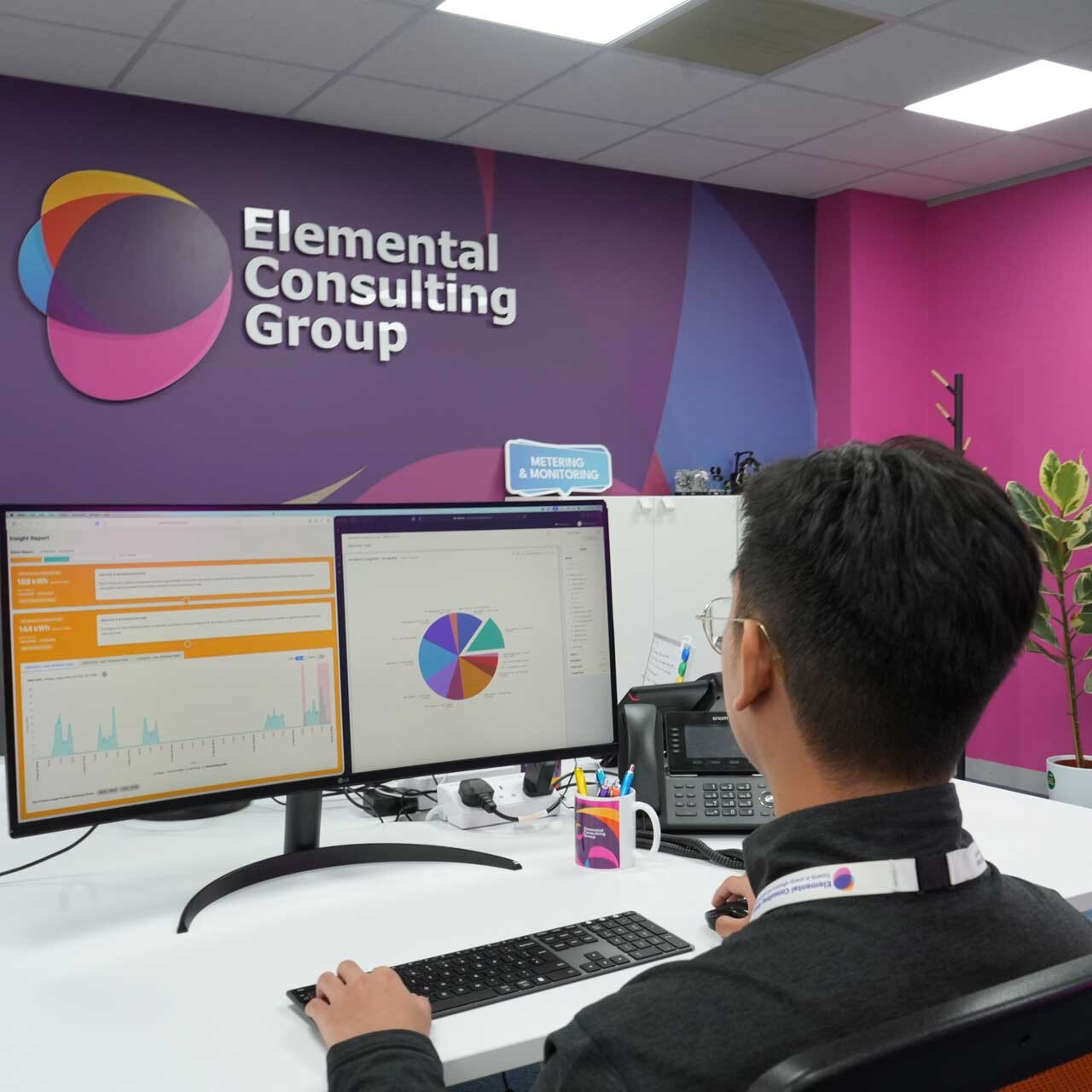





Carbon reporting involves calculating an organisation’s greenhouse gas emissions across relevant activities, such as energy use, fuel, transport, and other operational sources. It provides a consistent way to understand your emissions, track changes over time, and identify where reductions could have the greatest impact.
Clear carbon reporting can help you to:
- Understand your organisation’s carbon footprint
- Track emissions and performance over time
- Identify the main sources of emissions
- Support carbon reduction and Net Zero planning
- Provide reliable information for clients and stakeholders
- Meet relevant reporting and procurement requirements
We can also provide more specific reporting services, including Streamlined Energy and Carbon Reporting (SECR), where this is required.
We help you to establish a practical and consistent approach to carbon reporting, from collecting the right data through to calculating emissions and presenting the results. We work with the information you already have, helping to identify and resolve gaps so that your reporting is clear and defensible.
We can help you to:
- Establish a reporting approach suited to your organisation
- Understand which activities and emissions sources need to be covered
- Improve the consistency of your carbon data from year to year
- Resolve data gaps and agree appropriate assumptions
- Understand changes in your emissions and what’s driving them
- Use your results to inform reduction plans and wider reporting
The resulting data can be used to monitor performance, inform reduction plans, and support wider sustainability reporting. Where specific requirements apply, we can also provide dedicated SECR reporting support.

You'll be in good company
Some of the brands we work with















- Organisational carbon footprinting
- Scope 1, 2 and relevant Scope 3 calculations
- Energy, fuel and transport emissions
- Data collection and validation
- Recognised emission factors and methodologies
- Clear carbon reporting and outputs

We develop carbon reports using recognised carbon accounting methodologies, including the GHG Protocol Corporate Standard and ISO 14064-1, with clear boundaries, assumptions, emissions factors, and calculation methods. This helps to ensure that your emissions data is consistent, transparent and defensible for reporting, client requirements, due diligence, and wider decarbonisation planning.
Carbon reporting process

Reporting scope
We define the reporting boundary, period and emissions sources to be included, covering energy, fuel, transport, and other relevant activities.

Emissions data collection
We gather the required activity data from your existing sources, working with your teams to obtain information for all relevant emissions sources.

Data validation
We gather the required activity data from your existing sources, working with your teams to obtain information for all relevant emissions sources.

Carbon calculation
We apply appropriate emissions factors to calculate your carbon footprint, and analyse the results to identify the main sources of emissions.

Reporting & review
We present the results in a clear, consistent format, highlighting key findings and changes over time to inform future carbon reduction work.
- CIBSE-accredited energy professionals
- Expertise across energy, carbon and sustainability
- Robust carbon data collection and validation
- Recognised emissions factors and methodologies
- Scope 1, Scope 2 and relevant Scope 3 expertise
- Clear, consistent and audit-ready reporting
- Practical support with complex emissions data
- Identification of key emissions sources and hotspots
- Support for SECR and other reporting requirements
- Data-led insights to inform carbon reduction
- Clear pathway from reporting to practical action
Hear from our clients
Carbon reporting FAQs
Carbon reporting measures and communicates an organisation’s greenhouse gas emissions over a defined period. It typically covers Scope 1 and Scope 2 emissions, with relevant Scope 3 emissions included where appropriate. Clear carbon reporting helps organisations to understand their footprint, track changes, and support carbon reduction planning.
Businesses can improve carbon reporting by defining clear reporting boundaries, using reliable activity data and recognised emissions factors, and applying consistent calculation methods. Regular data validation and clear documentation of assumptions can improve accuracy, comparability, and confidence in reported emissions.
A carbon report typically includes an organisation’s emissions boundary, activity data, emissions calculations, and resulting carbon footprint. It may cover Scope 1, Scope 2 and relevant Scope 3 emissions, alongside emissions by source, methodology, assumptions, and year-on-year comparisons.
Yes. Carbon reporting can provide the emissions calculations and supporting data needed for SECR, where the organisation is within scope. SECR requires qualifying organisations to report their energy use, greenhouse gas emissions and energy efficiency measures as part of their annual reporting.
Explore our SECR service
Accurate carbon reporting establishes a baseline against which emissions reductions can be measured. Understanding the main sources of emissions helps organisations to identify priorities, track progress against reduction targets, and use reliable evidence to inform Carbon Management Plans and wider Net Zero strategies.
Explore our Net Zero services